
Attendance after hours: $80–$180
The figure that gets a licensed plumber to your door at night. Quotable on the phone, every time.
The first thing that happens is not a booking. It is a plumber telling you what to shut off right now, because the minutes before anyone arrives are where most of the damage is either done or prevented.
The honest test is whether it is still getting worse while you wait. Water, waste or gas going somewhere it should not, and not stopping. A burst pipe, sewage backing up into the shower, a hot water tank emptying through the ceiling, or any smell of gas: those are emergencies, and waiting until morning multiplies the damage bill.
Then there is the category people apologise for calling about: the only toilet in the house blocked, no hot water with a newborn, a drain backing up the night before an inspection. Call anyway. An after-hours call here reaches a plumber, not a promise of one tomorrow.


Kensington (postcode 2033) sits along Anzac Parade between Randwick Racecourse and Kingsford, with UNSW on its doorstep and Daceyville to the west. Federation and interwar semis, a heavy student rental population and newer apartment infill mean original single-dwelling drainage is carrying far more than it was ever designed to.
Before anything else, work out whether the failure sits inside your lot or on common property, because that decides who authorises the work and who is billed. As a rule of thumb: a fixture, a tap or pipework serving only your apartment is usually yours; a stack, a shared sewer line or a stormwater pit serving the building is usually the owners corporation's.
If it is after hours and the building manager is unreachable, we attend, make it safe, and write the report so it names the line and the lot. That report is what settles the invoice question later, and it is far easier to produce on the night than to reconstruct a fortnight afterwards.
The Federation and interwar housing stock still runs short terracotta sections with mortared joints, now ninety years old and long past the point where those joints stay sealed.
A drainage system laid a century ago was built for a household that used a fraction of the water yours does. Add a second bathroom, a dishwasher and a washing machine, and lines that coped for decades start showing where they are weakest.
That is not an argument for replacing everything. It is an argument for knowing which sections are actually tired, so the money goes into those rather than into the whole run on the assumption that old means finished.
Stop using water anywhere in the house. Every flush, every sink and especially the washing machine adds to whatever is already sitting in the line, and a machine mid-cycle is the single most common way a slow backup becomes a floor to mop.
The mature figs and paperbarks along Anzac Parade and the side streets have aggressive, water-seeking roots that reach well into private sewer lines through any joint that has opened.
If there is an overflow gully outside and it is running, that is the system doing its job and keeping it out of the house. Leave it clear and let it work until we arrive.
The slowest part of an apartment emergency is often not the plumbing — it is the door. Fob access, a basement that needs a resident to open it, a car park with no after-hours entry: any of those can add half an hour while water is still running.
Two things worth doing before you ever need them: find your lot's isolation valve — usually in the laundry or a hallway cupboard — and save the building manager's after-hours number in your phone. Both take five minutes on a calm evening and both save real time on a bad one.
Original earthenware gives way at the joints, and it rarely announces itself politely. Roots find the joint, the joint opens, and the section finally lets go on a night with the house full and one bathroom working.
Old pipe is not automatically bad pipe. But when a heritage-era line fails once, it is worth knowing whether you have had one bad joint or a tired run. We clear it, camera it before we leave, and you keep the footage — so any decision about relining is yours to make on evidence rather than on our word.
If this is the second or third time, the useful thing you can do at 2am is write down the date. Two or three of them tell a plumber more than any description, because the interval reveals how fast the obstruction rebuilds.
A shortening gap between call-outs is the signal that jetting has stopped being the answer. That is a daylight conversation, not a tonight one, but tonight is when the evidence gets recorded.
The figure that gets a licensed plumber to your door at night. Quotable on the phone, every time.
Business hours run about $120–$160. The premium is real and every genuine after-hours outfit charges one.
Attendance plus the first stretch of work plus minor parts. An isolated burst, a blocked toilet, a failed valve.
Slab leaks, gas faults, anything structural at 2am. Quoted before it starts, in writing.
The cheapest outcome, and one we give often. Describe it honestly and we will tell you which side of the line it is on.
Indicative Sydney ranges for 2026. Your job gets a fixed figure before anything begins. Figures here are indicative of the 2026 Sydney market rather than a quote from us, you get your own number as a fixed price before any work starts.

Not a call centre. You describe what is happening, we tell you what to shut off right now, and whether this genuinely needs someone tonight. Sometimes it does not, and we say so.
The nearest available crew heads for Kensington with the common failure points already stocked on the van: pipe, fittings, valves, drain gear.
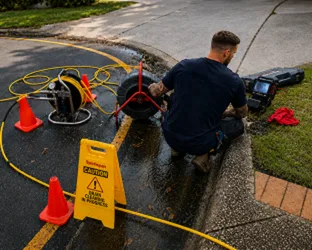
First job on site is stopping the damage: isolate, contain, make safe. Then you get a fixed price for the proper repair before it starts.

Most emergencies are permanently repaired on the spot. If a part has to wait for a supplier, you are left safe, watertight and functioning in the meantime.
Describe what it is doing and we will tell you honestly whether it needs a van now or costs less on Monday.
Cost, response times, and what actually counts as an emergency.
Ring us and a plumber picks up. Leave details instead and you will get a callback with an ETA, not a sales call.

Leave your details and our local Kensington team will call you back fast.